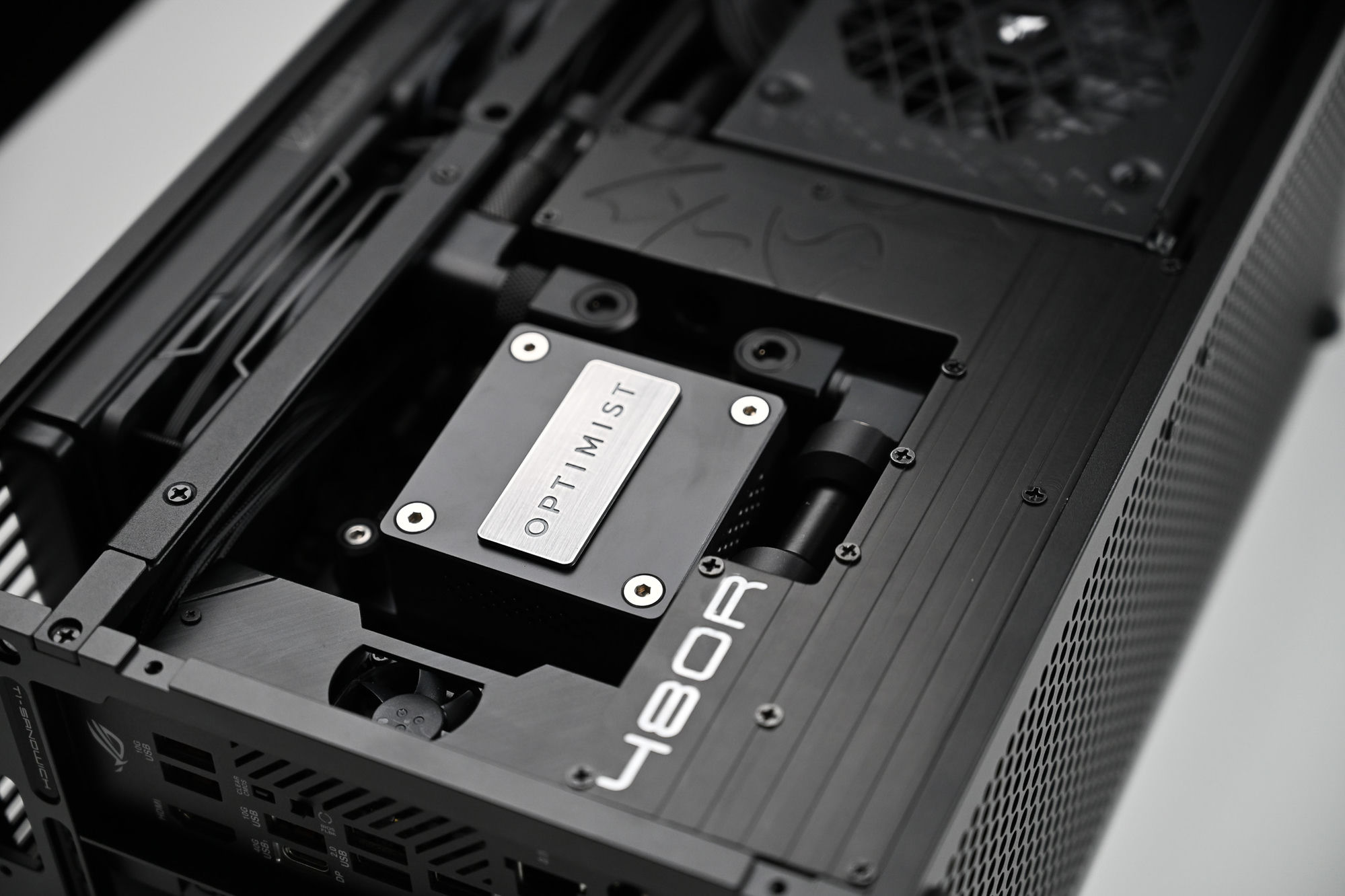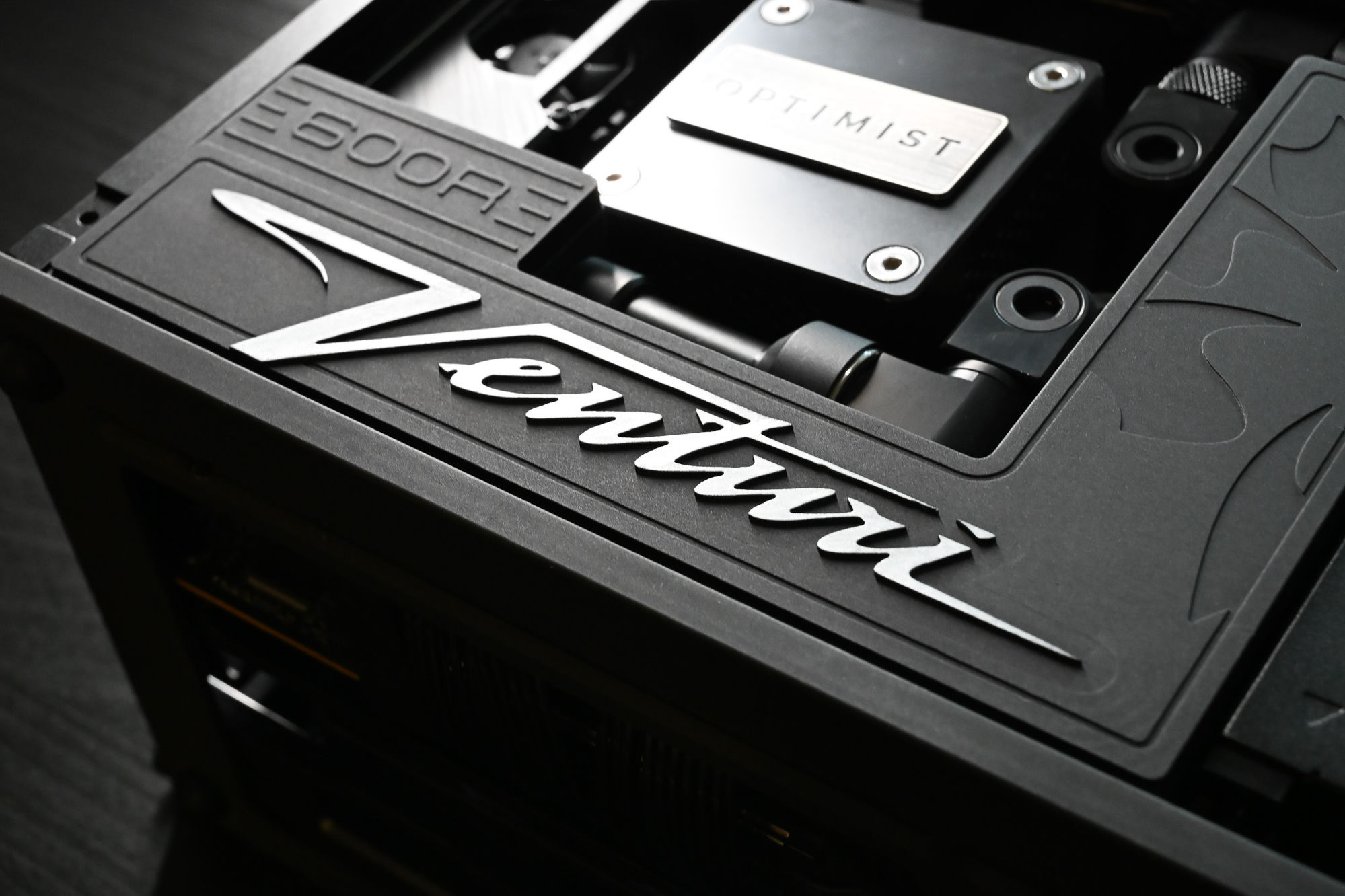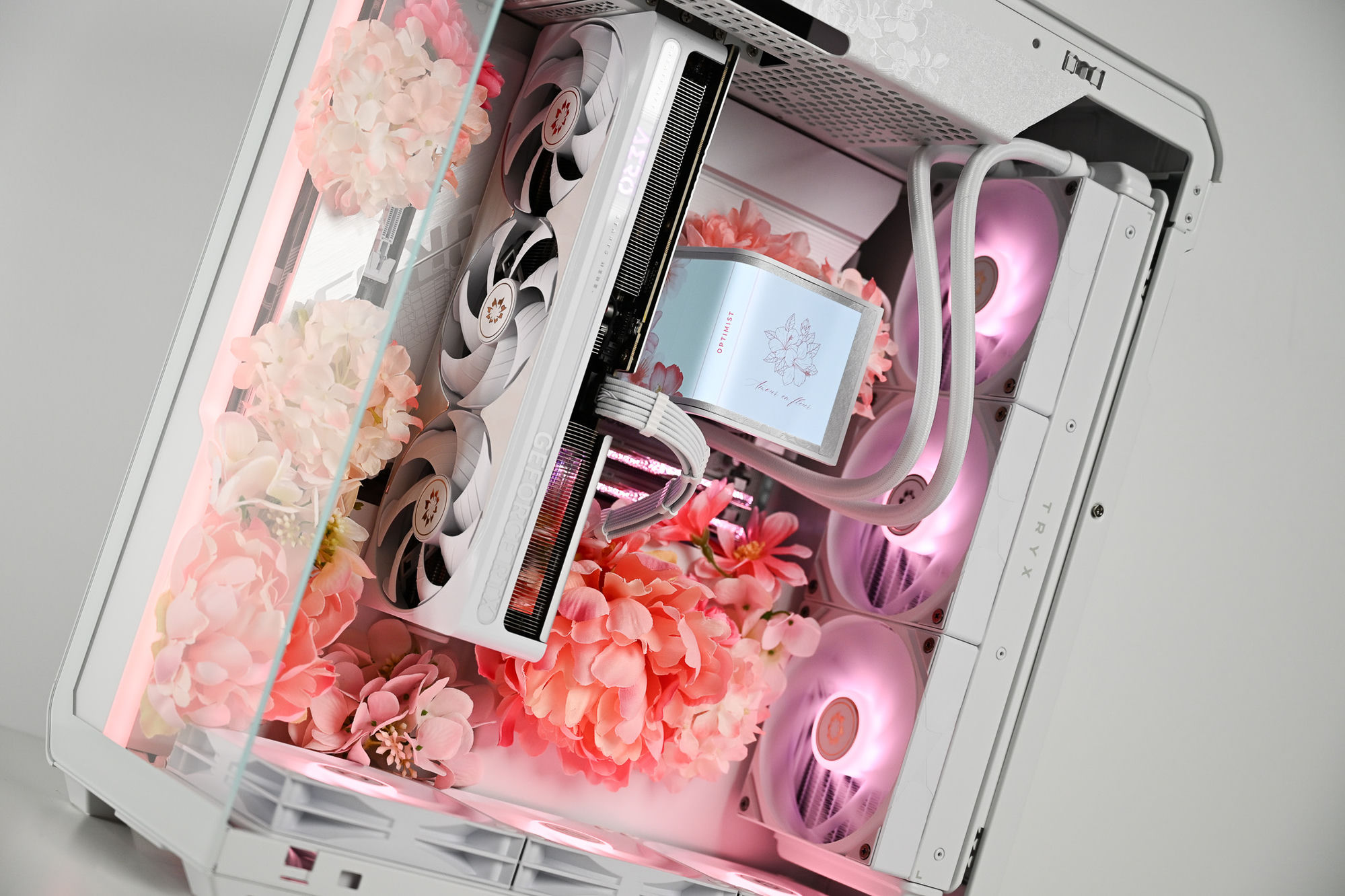

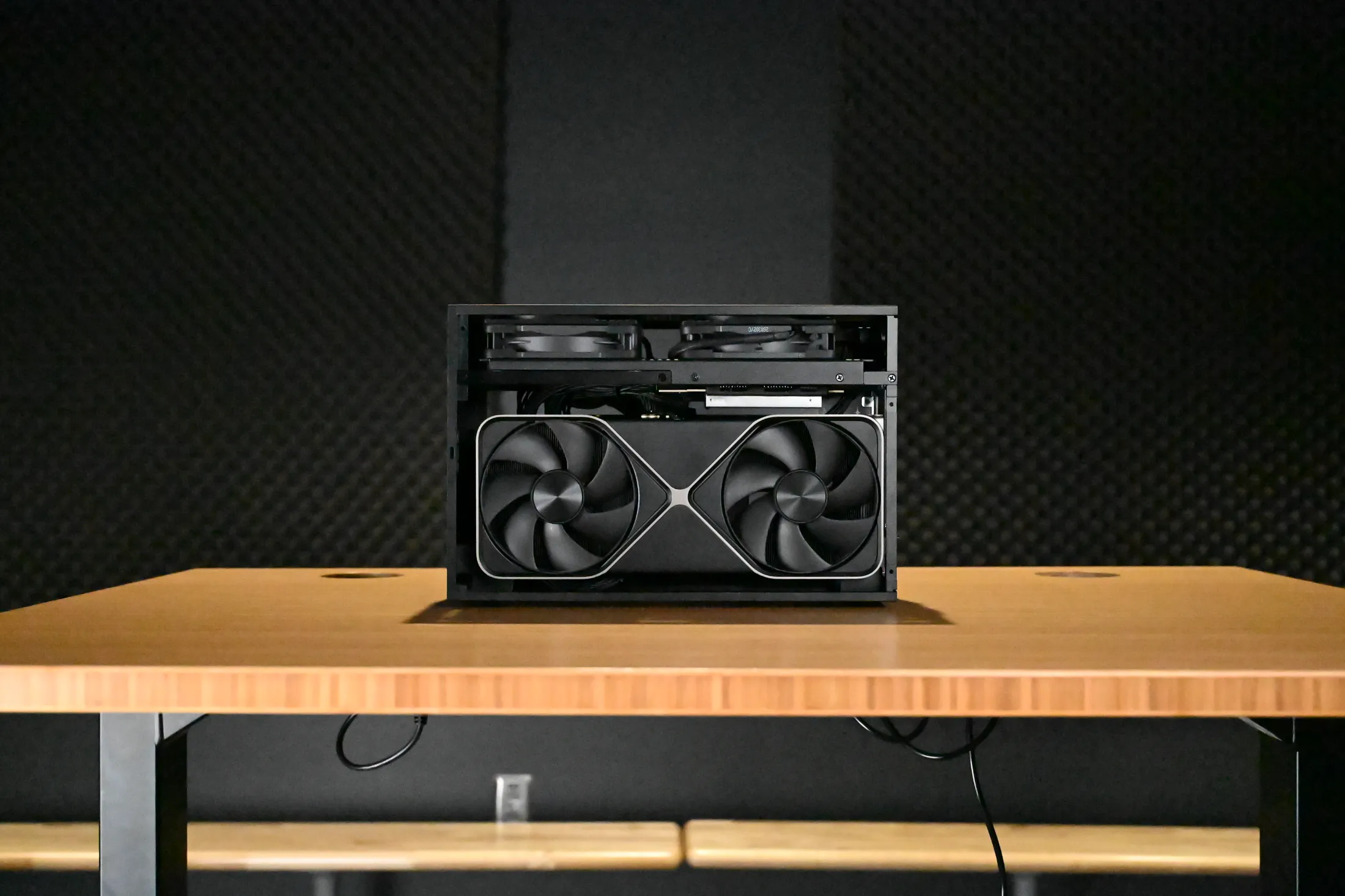
If you are searching for a portable gaming PC, you have probably been steered toward a gaming laptop. It is the obvious answer, and for a decade it was the only one. But the machines we build point at a different conclusion: the best portable gaming PC is a very small desktop. Not a compromise desktop, and not a mini PC with mobile silicon inside - a full desktop, with full desktop parts, in a chassis small enough to carry.
What a gaming laptop actually gives up
A laptop's shape sets its ceiling. The GPU inside a gaming laptop shares a name with its desktop counterpart, but it runs on a fraction of the power budget, because a thin chassis can only remove so much heat. The processor throttles for the same reason. The fans sit millimeters from your hands, so you hear every degree. And when a component ages out, it is soldered to the rest of the machine - the whole laptop retires together.
None of this is bad engineering. It is the honest cost of folding a computer flat. The question is whether you actually need the fold, or whether you need something smaller: a machine you can pack, carry to the studio or the tournament or the second home, and set down next to any monitor.
What makes a desktop portable
Portability in a desktop is not about a handle on top. It comes down to four things. Volume: the machine has to be genuinely small - under ten liters, a footprint that disappears into a bag or under an arm. Containment: no external power brick, no parts that dangle; everything inside one enclosure. Survivability: the graphics card is the heaviest component in the case, cantilevered off a slot that was never designed for motion - it needs real support before the machine can be shipped or carried. And composure: cooling that works with the case rather than against it, so density does not cost you acoustics.
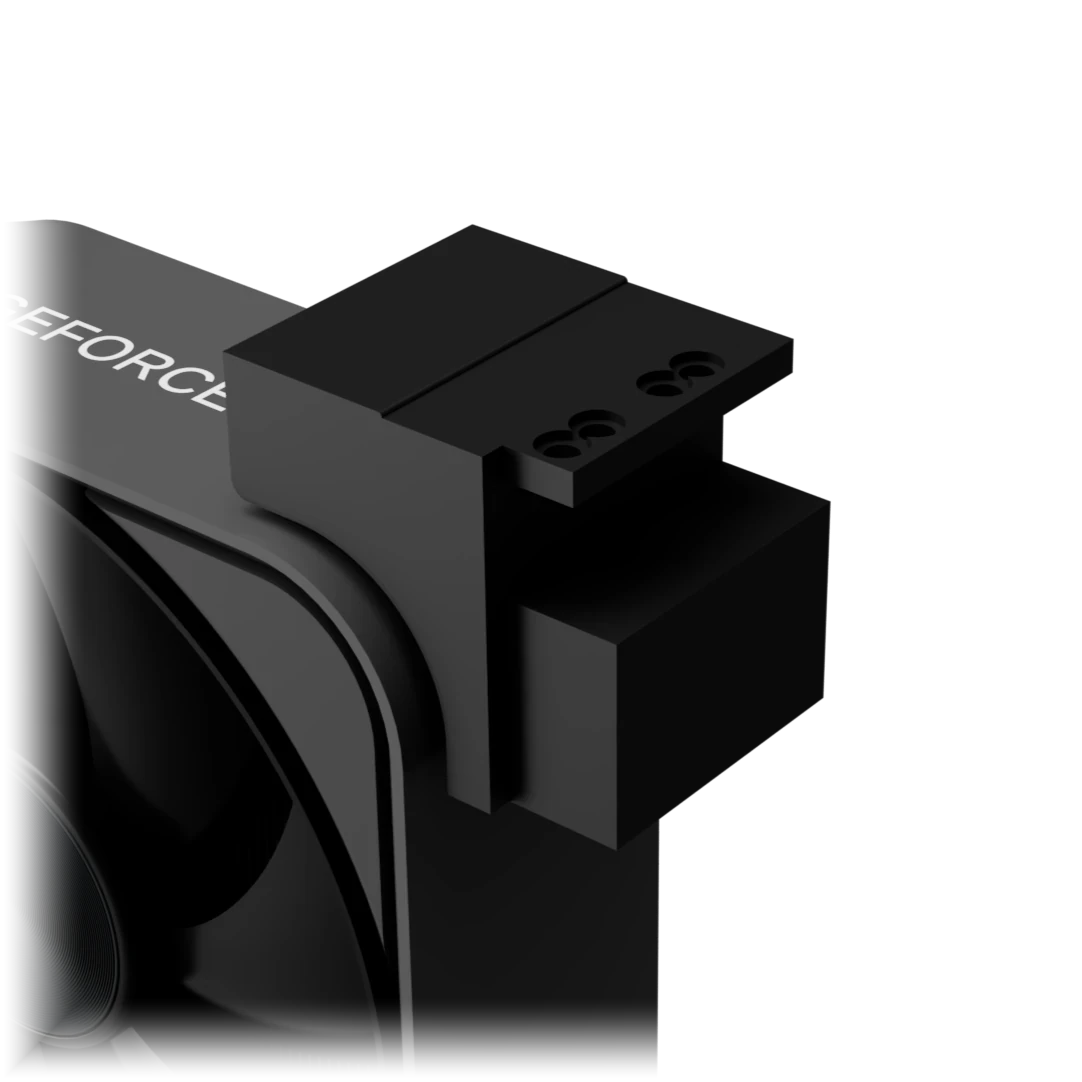
This is the part most small builds skip. Our Dusk carries custom braces screwed directly to the frame of the case, supporting the card across its body for up to 25 pounds of side pressure. What began as a thermal decision became a travel one: the card that made the machine powerful is also the card that made it fragile, until it was braced.
We wrote about the rest of that engineering - the 20mm heat chamber that runs the spine of the chassis, the ducts that carry exhaust cleanly out of the case - when we introduced the machine. The short version: heat is the enemy of small, and the answer is architecture, not louder fans.
The desktop that came out of it
Dusk is our answer to the portable question: under ten liters and 0.49 square feet of desk, up to an RTX 5090 and a Ryzen 9 with up to 96GB of memory, fully contained with no power brick, aluminum mesh panels protecting the internals, and the braced card above. It has quietly served travellers, simulator rigs, and businesses since 2025. It is, we think, what a portable gaming PC should have been all along. (link "Dusk" to /products/dusk)
Designed to be forgotten. The objective on Dusk was to fill as much power as possible into the smallest feasible size.
- The Dusk Design Brief
What to look for in a portable gaming PC
Whether you buy from us or build your own, hold any small machine to the same standard. True volume under ten liters, measured honestly. A power supply inside the case, not on the floor. Explicit support for the graphics card - ask what happens to the card when the machine is carried, and walk away from a shrug. A cooling path designed for the enclosure, not adapted to it. And a noise figure the maker is willing to state at full load, not at idle.
A machine that clears that bar will outrun any laptop at the same price, last longer, repair easier, and be quieter doing it. The only thing it will not do is fold in half.
Dusk starts at $2,600, configured to order and hand-assembled, with 2 years of parts coverage and 6 years of labor. If you want the small machine done properly, configure yours.